.svg)
What Your Customers Really Want (And Why Most Businesses Miss It)
Most business leaders believe they understand their customers.
They have the data, demographics, buying behavior and the reports.
And yet, growth still feels harder than it should.
The problem is not a lack of information.
It is a misunderstanding of what actually drives decisions.
People do not buy because of logic alone.
They buy because something resonates first, then they justify it later.
This is where traditional market research often falls short.
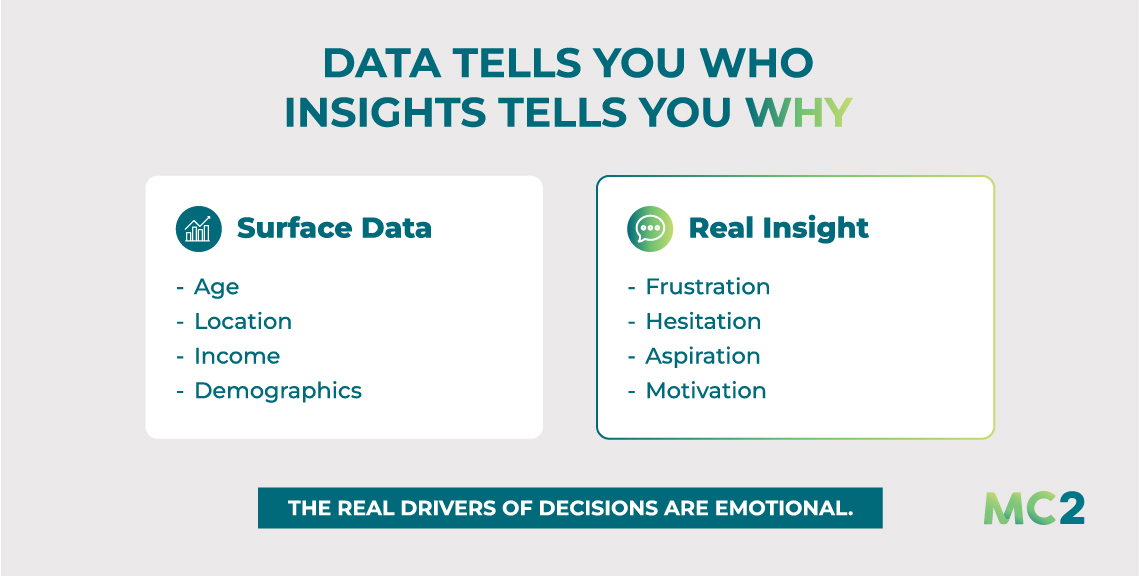
Knowing how old your customer is, where they live, or how much they earn might help with targeting, but it rarely explains why they choose you, or why they hesitate.
The real questions live underneath the surface:
What frustrates them?
What are they trying to avoid?
What outcome are they hoping for?
What does success feel like in their world?
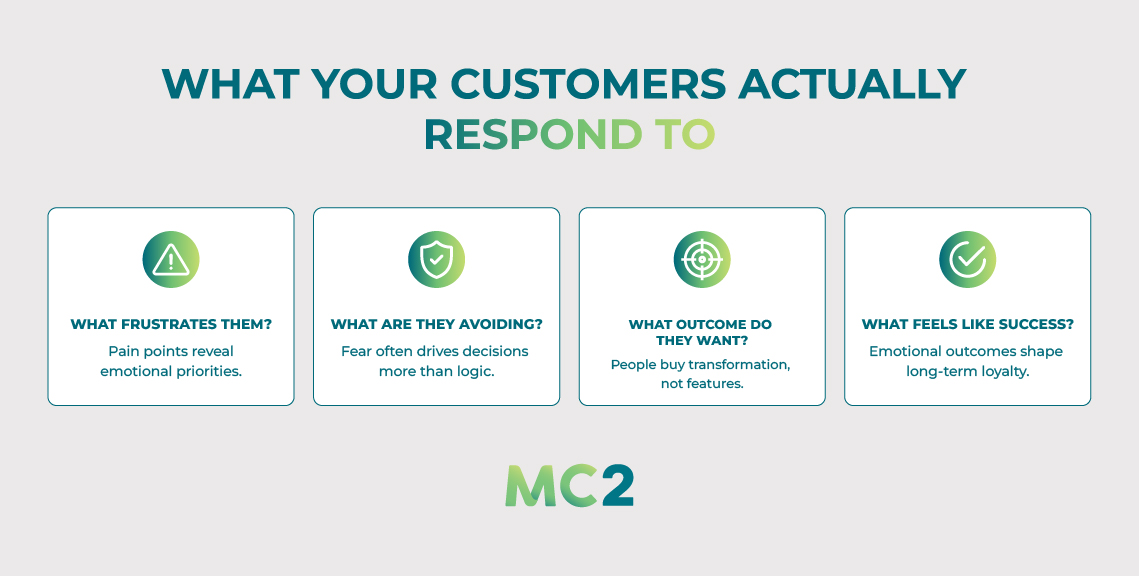
Those answers shape everything, from messaging to product development to how your brand shows up over time.
Market Research Is Not the Expensive Part
Many businesses hesitate to invest in understanding their audience because they assume research means big budgets, long timelines, and outside firms.
In reality, what is expensive is building marketing on assumptions.
When you skip the work of understanding motivation, fear, and desire, you often end up spending far more on campaigns that do not connect.
The most valuable insights usually come from asking better questions, not more questions.
Instead of asking customers what they want you to build, ask:
What do you like and dislike about your current experience?
What worries you about making the wrong choice?
What makes something feel worth it?
What makes you hesitate or delay?
These answers reveal values, not opinions.
Values are what shape decisions.
Why Emotional Insight Beats Product Messaging
This applies across industries.
B2B or B2C.
Product or service.
Large organization or small business.
People are people.
They respond to feeling understood.
Strong brands use this insight to simplify their focus.
Volvo did not become synonymous with safety by listing features first. They listened to customer fears, then built systems, technology, and messaging around that single priority.
Apple does not lead with specifications. They lead with creativity, individuality, and how technology enables contribution.
Starbucks is not just selling coffee. They created a place to pause and connect between work and home.
In each case, the product matters, but it is not the headline.
The outcome is.
The Commodity Trap
One of the fastest ways to blend in is to rely on generic claims:
We have better people.
We care more.
We work harder.
Our product is higher quality.
When everyone says the same thing, it stops meaning anything.
This is commodity language, and it quietly erodes differentiation.
The brands that break free do so by anchoring their message to a specific emotional outcome their customers value, not to a long list of attributes.
That clarity gives direction to everything else.
What This Means for Your Brand
Before adding more tactics, content, or campaigns, it is worth slowing down and asking a few strategic questions:
What problem do we help people move away from?
What tension do we help reduce?
What outcome do we help them move toward?
What is the one idea we want to be remembered for?
Clarity here creates leverage everywhere else.
At MC2, we believe marketing works best when it starts with understanding people, not pushing products. When you understand what your audience truly values, your message becomes simpler, more focused, and more effective.
That is how brands earn trust.
That is how they stop competing on price.
And that is how they build something that lasts.
More to come on how to turn these insights into practical, repeatable marketing decisions.