.svg)
Navigating the Marketing Maze: In-House vs. Agency - Your Roadmap to Success
Are you struggling to grow your business and feeling stuck on whether to invest in in-house marketing or hire outside resources? You're not alone in this common dilemma. Many business owners find themselves at this crossroads, unsure of which path will lead to the best results. Let's break down this complex decision and explore your options.
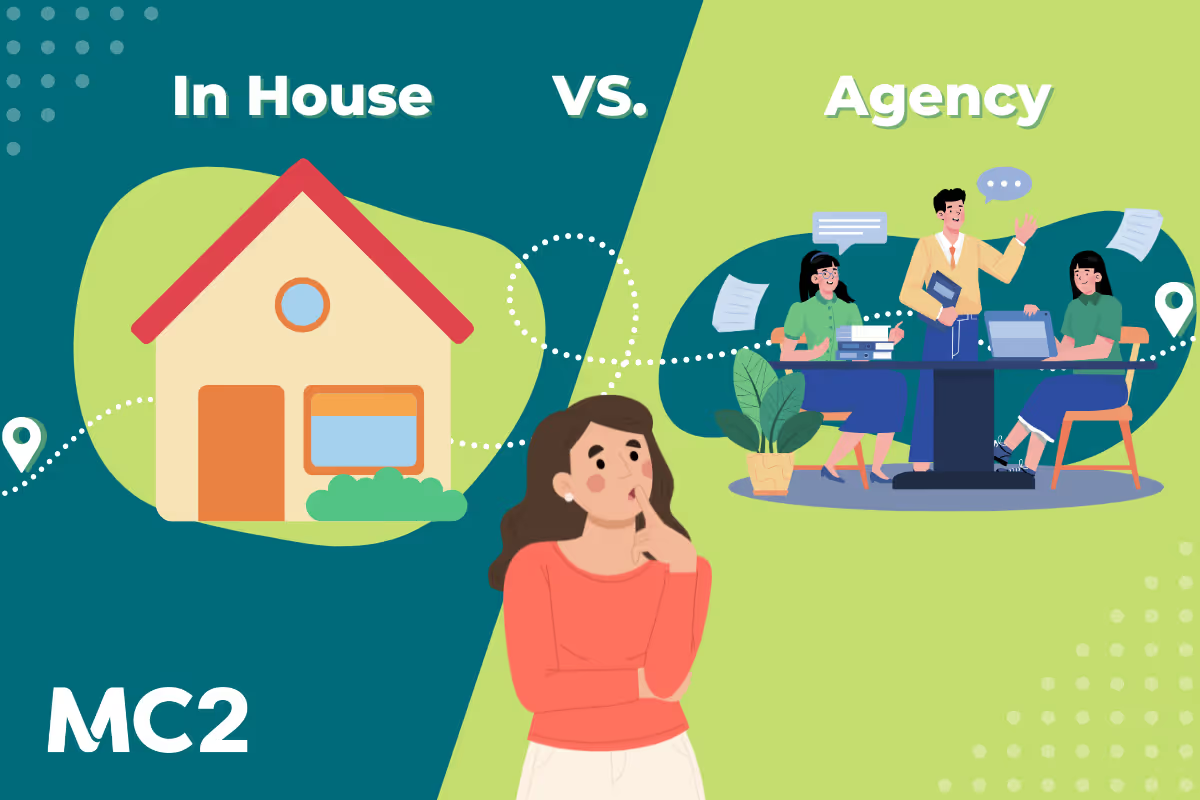
The Marketing Dilemma: Internal vs. External
Every business, regardless of size, faces the challenge of how to approach their marketing efforts. You might already have some internal staff with marketing skills, but how do you expand from there? Should you hire more full-time employees? Invest in training your current team? Bring in contractors? Or partner with an agency?
Here's the kicker: there's no one-size-fits-all approach. Your marketing needs will change over time as your business grows and evolves. What works for you now might not be the best solution a year from now. That's why it's crucial to understand all your options and how they can fit into your long-term strategy.
Assessing Your Current Situation
Before we dive into the pros and cons of each approach, let's take a moment to assess where you're at:
- What marketing skills do you currently have in-house?
- What are your immediate marketing goals?
- What's your budget for marketing activities?
- How quickly do you need to scale your marketing efforts?
Answering these questions will help guide your decision-making process. Remember, it's not just about what you need right now but also about building a flexible marketing structure that can grow with your business.
The In-House Approach: Building Your Own Team
Building an in-house marketing team can feel like assembling your very own all-star lineup. You get to handpick talent that aligns with your company, culture, and vision. But is it always the right call? Let's break it down:
Strengths:
- Brand Intimacy: Your team lives and breathes your brand, understanding its nuances inside and out.
- Quick Turnaround: Need a last-minute campaign? Your in-house team can sprint into action.
- Aligned Goals: Their success is directly tied to your company's success.
Challenges:
- Resource Intensive: Building a comprehensive team requires significant investment in salaries, benefits, and ongoing training.
- Skill Gaps: It's challenging to find a small team that excels in every aspect of marketing.
- Limited Perspective: Being too close to the business can sometimes lead to tunnel vision.
The Agency Approach: Bringing in the Pros
Partnering with a marketing agency is like having a team of specialized consultants on speed dial. They bring a wealth of experience from various industries and can often hit the ground running. But is it the perfect solution for everyone? Let's explore:
Advantages:
- Diverse Expertise: Agencies typically have specialists for every marketing discipline.
- Cost-Effective for Some: While agency fees can be substantial, they are often cheaper than maintaining an entire in-house team.
- Scalability: Agencies can quickly ramp up or down based on your needs.
Considerations:
- Learning Curve: Agencies need time to fully understand your brand and industry.
- Less Direct Control: Day-to-day execution is handled externally, which can be challenging for some organizations.
- Potential Misalignment: Agency work may sometimes drift from your core brand identity without proper management.
The Hybrid Approach: Flexibility is Key
Here's where things get interesting. Many successful businesses find that a hybrid approach offers the best of both worlds. This might look like:
- A core in-house team is handling day-to-day operations and strategy.
- Agency partners are brought in for specialized projects or to fill skill gaps.
- Freelance contractors are used for specific, time-bound projects.
This approach allows you to maintain control over your brand and core marketing functions while accessing specialized skills as needed. It's particularly useful for businesses in growth phases or those with fluctuating marketing needs.
Starting Small and Scaling Up
For many businesses, especially those just beginning to invest seriously in marketing, starting with a marketing coordinator can be a terrific first step. This person can:
Manage the day-to-day marketing operations
Serve as a liaison between your business and external marketing resources
Ensure that all marketing efforts align with your business goals and brand identity
As your needs grow, you can gradually expand your in-house capabilities while leveraging external resources for specialized skills or large-scale campaigns.
Adapting to Change
Remember, your marketing needs will evolve as your business grows. What works for you at the startup phase might not be the best approach when you're an established player in your market. Whether you're navigating a challenging economy, as discussed in our blog on Marketing During a Recession, or adjusting to emerging technologies like AI in You Will Get Left Behind: AI is Now Essential for Marketing, be prepared to reassess your marketing structure regularly and make changes as needed.
Making the Right Choice for Your Business
So, how do you decide which path to take? Here are some steps to guide your decision:
- Assess Your Current Capabilities: Take an honest inventory of your existing marketing skills and resources.
- Define Your Goals: Clearly articulate your short-term and long-term marketing objectives.
- Evaluate Your Budget: Consider not just the immediate costs but the long-term investment required for each option.
- Think About Culture Fit: Reflect on whether your organization thrives on direct control or if you're comfortable with more collaborative partnerships.
- Consider Scalability: How quickly might you need to ramp up your marketing efforts? How easy would it be to scale back if needed?
Remember, there's no universal right answer. The key is to find an approach that aligns with your business goals, resonates with your target audience, and allows you to adapt as your needs change.
Whether you choose to build an in-house team, partner with an agency, or create a hybrid model, the most important thing is to make an informed decision. By carefully evaluating your needs, resources, and long-term objectives, you're not just solving a short-term problem; you're laying the foundation for long-term success in the ever-changing world of marketing.
So, are you ready to take the next step in your marketing journey? With the right strategy and team in place, you'll be well-equipped to tackle whatever challenges come your way and drive your business toward success.