.svg)
What is Strategy? (And Why Most People Get It Wrong)
You hear the word "strategy" thrown around everywhere. In boardrooms, on LinkedIn, in agency pitches. Hell, we say it ourselves—we're a strategy-led agency. But here's the thing: most people don't actually know what strategy means.
Strategy isn't your tactics. It's not your to-do list. It's not even your brilliant creative campaign.
Strategy is your answer to one fundamental question: How do you win?
The Real Definition of Strategy
Think of strategy as your game plan—but not the play-by-play. It's the overarching framework that determines how you're going to achieve your goal. It's the "how" behind the "what."
When a football coach designs a strategy, they're not just listing plays. They're deciding: Are we going to win through a dominant running game? Are we going to out-pace them with quick passes? Are we going to wear them down with defense? That's strategy—the fundamental approach to victory.
Your marketing strategy works the same way. Before you choose channels, before you write copy, before you design creative—you need to know how you're going to win in your market.
Where Most People Go Wrong
Here's where businesses mess up: they jump straight to tactics without strategy. They say things like:
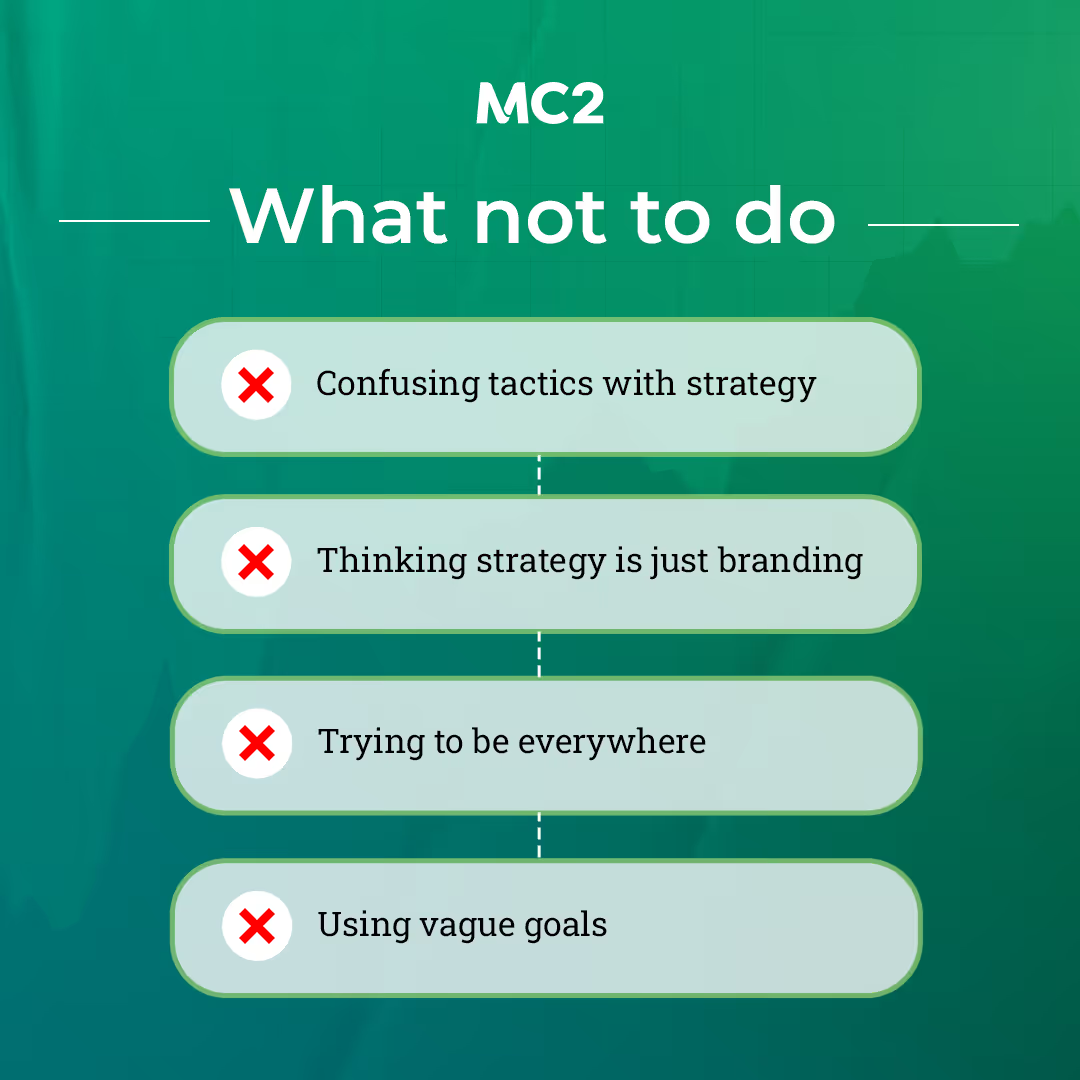
- "Our strategy is to be on TikTok and Instagram"
- "Our strategy is to do influencer marketing"
- "Our strategy is to rebrand"
No. Those are tactics. Those are tools in your toolbox.
Your strategy is deeper. It's asking: What's our unfair advantage? What makes us different? How do we position ourselves to win against the competition? What's our path to capturing market share?
How We Think About Strategy at MC2
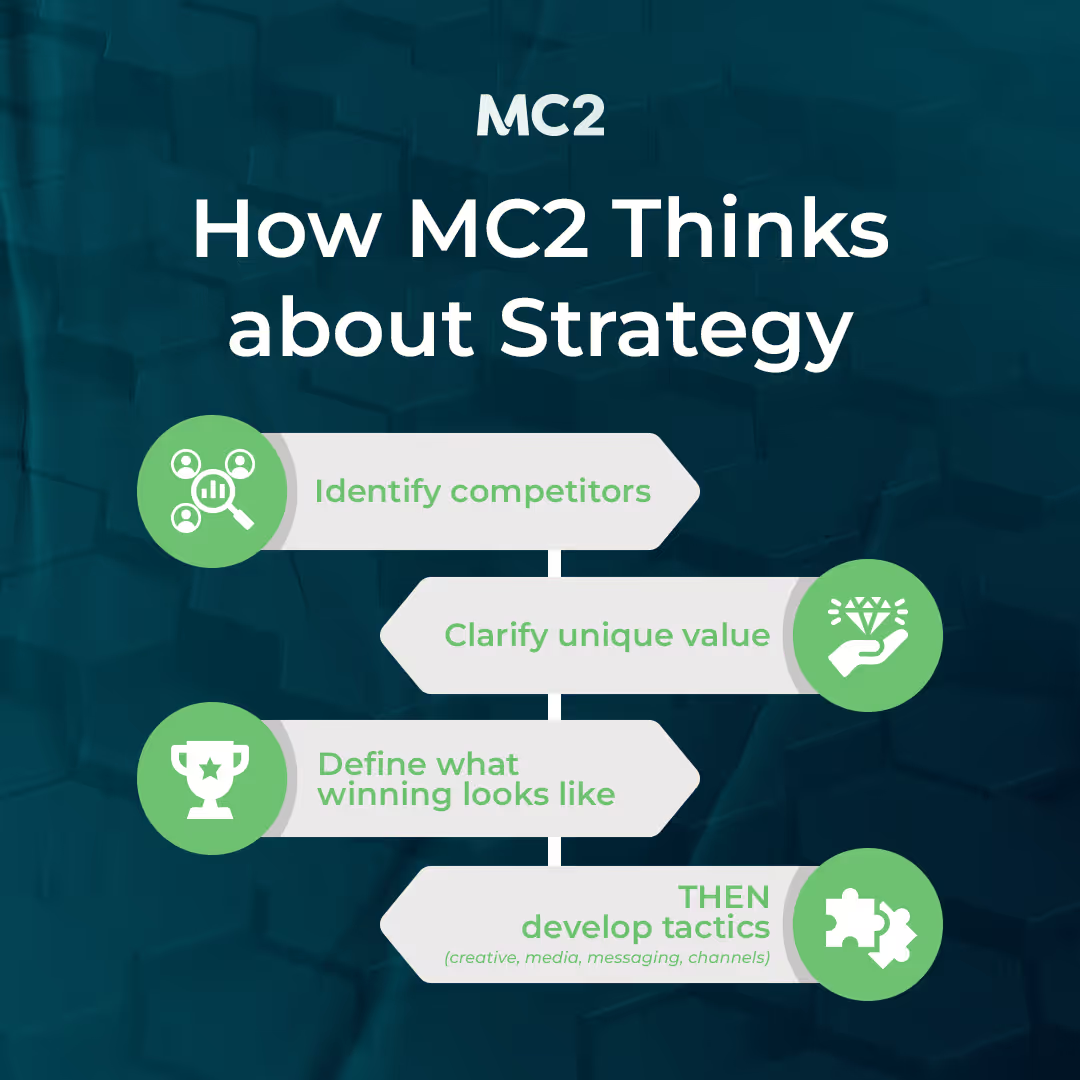
When we work with clients, we don't start with the fun stuff—the creative, the campaigns, the content calendar. We start with the hard questions:
Who are you really competing against? (And it's probably not who you think)
What's your unique value proposition? (And "we care about our customers" doesn't count)
Where can you win? (Because you can't win everywhere)
What does winning actually look like? (Revenue? Market share? Brand awareness? Be specific)
Only after we nail down these fundamentals do we get to the tactics—the how we'll execute this strategy through creative, media, messaging, and channels.
Strategy in Action: A Real Example
Let's say you're a local coffee shop competing against Starbucks. Your tactics might include social media, loyalty programs, and local partnerships. But what's your strategy?
Strategy Option A: Position as the premium, artisanal alternative—higher quality, local sourcing, craft experience Strategy Option B: Position as the convenient, community hub—faster service, local gathering place, neighborhood feel Strategy Option C: Position as the value alternative—same quality, better prices, more for your money
Each strategy leads to completely different tactics, messaging, and creative approaches. The strategy is your northstar—everything else flows from there.
Why This Matters for Your Business
Without a clear strategy, you're just throwing tactics at the wall and hoping something sticks. You'll waste budget on channels that don't fit your approach. You'll confuse your audience with mixed messaging. You'll compete on price when you should compete on value.
But when you have a solid strategy—when you know how you're going to win—everything becomes clearer. Your creative is sharper. Your media is more targeted. Your messaging is consistent. Your team is aligned.
That's why we're strategy-led at MC2. Because tactics without strategy is just expensive guessing.
Ready to stop guessing and start winning? Let's talk about your strategy.