.svg)
A Brand Story Only Works When It Shows Up Everywhere
Every business we talk to has a brand story. Not every business has a brand that actually works.
That's not a coincidence. Having a clear story is powerful, but clarity alone doesn't create results. Execution does.
Here's the real difference between the brands that grow and the brands that stall: it's not whether they have a good story. It's whether that story shows up, gets reinforced, and gets lived out at every single touchpoint someone has with them.
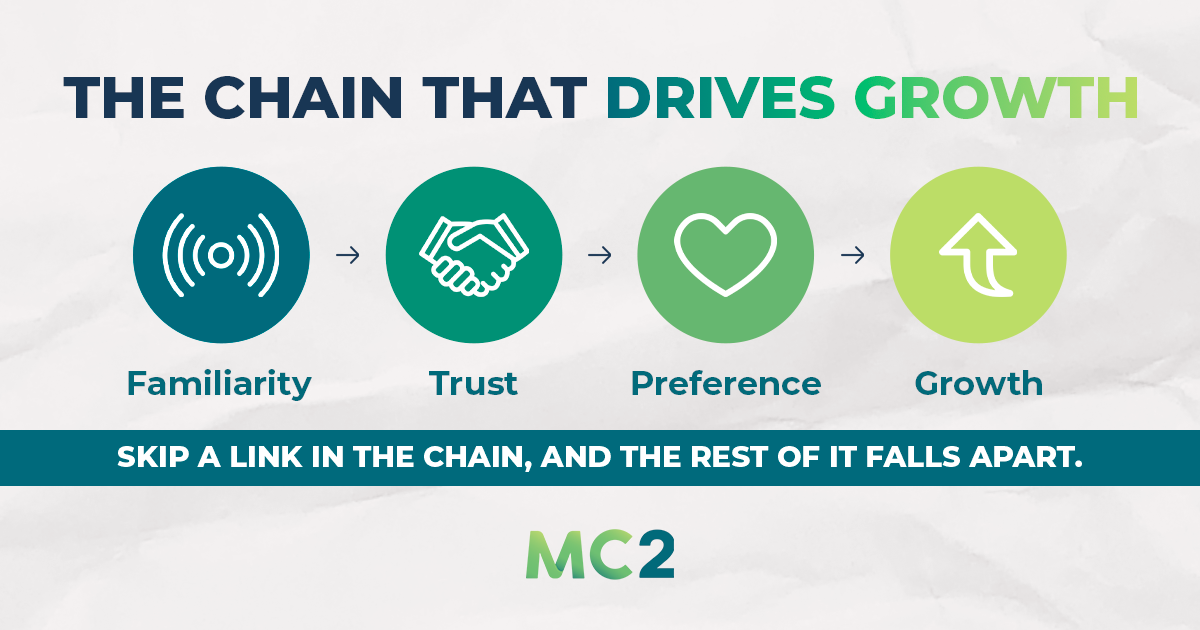
A brand story doesn't work because it's clever. It works because it becomes familiar. And that's the whole game, honestly. Familiarity builds trust. Trust drives preference. Preference drives growth. Skip a link in that chain and the rest of it falls apart.
Consistency Is What Turns Strategy Into Momentum
Let's clear something up first: consistency is not about posting more content or being louder than everyone else in your market. It's about creating reliable expectations.
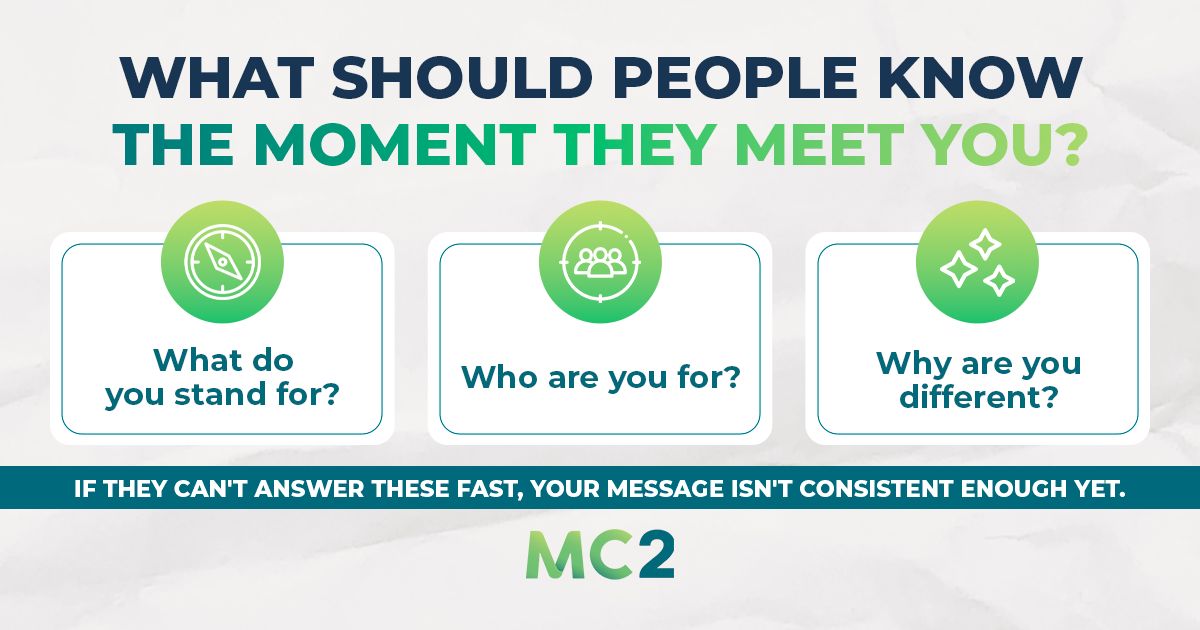
When someone runs into your brand, they should be able to answer three questions pretty quickly:
- What do you stand for?
- Who are you for?
- Why are you different?
That kind of recognition only happens one way - the same core message showing up again and again, across time and across every channel you use.
This is why the brands that feel strong aren't the ones constantly changing their message; they're the ones repeating it with discipline.
Build a Simple, Sustainable Content Rhythm
One of the biggest mistakes we see businesses make is confusing intensity with consistency.
Posting every single day for a month and then disappearing for the next three doesn't build trust. It actually works against you. A simple, realistic cadence you can stick to beats a burst of activity you can't sustain, every time.
The goal isn't to overwhelm your audience. It's to stay present. Pick a rhythm your team can actually maintain, and then protect it like it matters, because it does.
Consistency compounds quietly. It rarely feels dramatic in the moment. Give it enough time, though, and it turns into real momentum.
Let the Story Travel Across Channels
Your brand story shouldn't live in just one place. It should show up in:
- Your website language
- Your social content
- Your email communication
- Your sales conversations
- Your presentations and proposals
Notice the word there is "show up," not "get rewritten." Every channel should reinforce the same story, not invent a new one.
You also don't need to be everywhere. You need to be where your audience already pays attention. Choose those channels on purpose, and show up there with clarity and consistency instead of stretching yourself across every platform that exists.
Be Human, Not Polished
Strong brands feel human. They don't hide behind perfection.
They share perspective. They show progress. They leave room for imperfection.
Over-produced content tends to create distance. Honest content builds connection. People trust brands that feel real, not rehearsed, and no amount of polish makes up for that.
Generosity Builds Authority Faster Than Promotion
One of the fastest ways to build trust is to just be generous with what you know.
When you share insight openly instead of gating it behind a sales pitch, something shifts. You stop feeling transactional. You start feeling credible.
Generosity signals confidence. It tells the market you're not afraid to teach, because you know your own value well enough to understand that teaching doesn't give it away. This doesn't replace selling. It supports it.
Awareness Comes Before Conversion
Plenty of businesses pour their budget into closing deals while neglecting the work of simply being known. Here's the problem with that: people rarely buy from brands they've never heard of.
Familiarity lowers risk. Recognition creates comfort. That's exactly why known brands have the edge. When someone's faced with a choice, they default to what feels familiar. That's not manipulation, that's just how people work.
So before you go all in on bottom-of-funnel tactics, make sure your brand is visible, recognizable, and understood in the first place. Everything downstream gets easier once that groundwork exists.
Measure Progress With the Right Expectations
Brand work isn't instant. It's cumulative, which means you need to know what to actually look for instead of expecting overnight revenue.
Watch these leading indicators instead:
- Engagement and attention
- Message clarity in sales conversations
- Reduced friction in decision-making
- Improved alignment across teams
Over time, these show up in revenue, retention, and growth. Not overnight. But meaningfully, and that's a trade worth making.
The Long View of Brand Building
A brand story isn't a campaign. It's a commitment.
It takes patience, repetition, and clarity, and it rewards the businesses willing to stay the course when it doesn't feel dramatic yet.
At MC2, we believe brand isn't about hype or shortcuts. It's about alignment: between strategy and execution, between marketing and sales, between what you say and what people actually experience when they interact with you.
When that alignment exists, growth gets more sustainable and sales get easier. But more than that, your brand earns something far more valuable than attention. It earns trust.
That's how brands last.
Ready to Make Your Story Work as Hard as You Do?
Knowing your brand story and actually executing it are two very different things, and most businesses get stuck somewhere in between.
If that sounds familiar, you don't have to sort it out on your own. This is exactly the kind of work we live for at MC2, turning a good story into a system that shows up everywhere your customers already are.
Ready to see what that could look like for your brand? Book a Discovery Call with us, and let's build something that actually lasts.